STEP-UP ByteSized dRTP
ByteSized dRTP is a series of events providing key research software, research data and research computing infrastructure skills in just 90 minutes! STEP-UP’s series’ of “ByteSized” sessions are based on “byte-sized” format developed in the UNIVERSE-HPC project.
Each ByteSized dRTP session includes a companion podcast episode released through the Code for Thought podcast series. The topic areas have been expanded from a focus on research software skills to a wider group of topics that are intended to support the whole digital Research Technical Professionals (dRTP) community. This will include sessions covering research software, research data and research computing infrastructure topics.
ByteSized dRTP sessions are run under the STEP-UP ByteSized Code of Conduct.
For any questions related to the series, or if you’d like to run a session on a topic that we’ve not yet covered, you can get in touch with the STEP-UP team.
Future STEP-UP ByteSized dRTP sessions

Series Green Computing, Episode 4: nf-co2footprint: estimating the carbon footprint of Nextflow pipelines
Date: Monday 30 November, 2026 14:00-15:30 BST
Instructor(s): Nadja Volkmann and Josua Carl, Quantitative Biology Center (QBiC)
Links:
Registration: Sign up here
Computational research, including bioinformatics, increasingly contributes to greenhouse gas emissions. This talk introduces nf-co2footprint, a plugin for the workflow manager Nextflow that estimates the energy consumption and CO₂e emissions of pipeline runs. We will present its implementation, including how emissions are estimated for each pipeline step from resource usage, hardware power draw and regional carbon intensity, and share insights from benchmarking against hardware-level power measurements. Finally, we will look at the output files it produces: an interactive HTML report, a per-step trace file and a machine-readable provenance file. The talk will be followed by a guided tutorial on using and configuring the plugin.
Prerequisites
Participants will need Nextflow version compatible with nf-co2footprint v1.4.0 installed (see https://nextflow-io.github.io/nf-co2footprint/usage/configuration/#version-compatibility).
Series Green Computing, Episode 3: ByteSized dRTP: CATS the Climate Aware Task Scheduler
Date: Monday 16 November, 2026 14:00-15:30 BST
Instructor(s): Colin Sauze, National Oceanography Centre
Links:
Registration: Sign up here
Many power grids experience dramatic shifts in carbon intensity due to the presence of intermittent renewable energy sources. CATS schedules computational jobs to run when the predicted carbon intensity of running them will be lowest. It was originally developed for managing single jobs using the simple “at” scheduler supplied with most Unix systems, but has since been modified to work with Slurm and to consider the effects of rescheduling multiple jobs. It can use carbon intensity forecasts from many providers including carbonintensity.org.uk and WattNet.
Prerequisites
Participants will need Python 3.11+ installed. For the hands-on session, a Linux/Mac machine (or a connection to a Linux server). Windows users will still be able to follow the demo but may not be able to reproduce it fully on their machine.
Geographical location
Please note that CATS currently works for European geographical locations. However, attendees from other locations are still welcome to join the session if interested in CATS.
Series Green Computing, Episode 2: ByteSized dRTP: Metrics for monitoring software emissions efficiency
Date: Monday 9 November, 2026 13:00-14:30 BST
Instructor(s): Andrew Turner, EPCC, University of Edinburgh
Links:
Registration: Sign up here
How do we monitor emissions efficiency and evaluate choices to improve emissions efficiency ass part of our commitement to responsible computing? In this session I will briefly introduce a family of related metrics derived from the Sofware Carbon Intensity metric from the Green Software Foundation. Using these metrics can provide the basis of a quantitative understanding of emissions efficiency from use of digital research infrastructure.
Prerequisites
None specified
Series Green Computing, Episode 1: ByteSized dRTP: Green continuous integration and continuous deployment (CI/CD)
Date: Monday 2 November, 2026 14:00-15:30 BST
Instructor(s): Joseph G. Wallwork, University of Cambridge
Links:
Registration: Sign up here
Continuous integration and continuous deployment (CI/CD) workflows allow testing workflows, website deployments, and much more to be automated. It is good software engineering practice to set up such workflows, to avoid manual effort. However, such workflows come with a computational cost and hence an associated environmental cost. Naive configuration can lead to unnecessary triggering of workflows and therefore unnecessary carbon emissions. This session will introduce how to configure CI/CD with GitHub Actions and walk through several best practices for configuring them in an environmentally responsible manner.
Prerequisites
Participants will need experience with git, GitHub (with an account), and command line. Python package https://copier.readthedocs.io/en/stable/, and any Python version that would support it.
Past STEP-UP ByteSized dRTP sessions
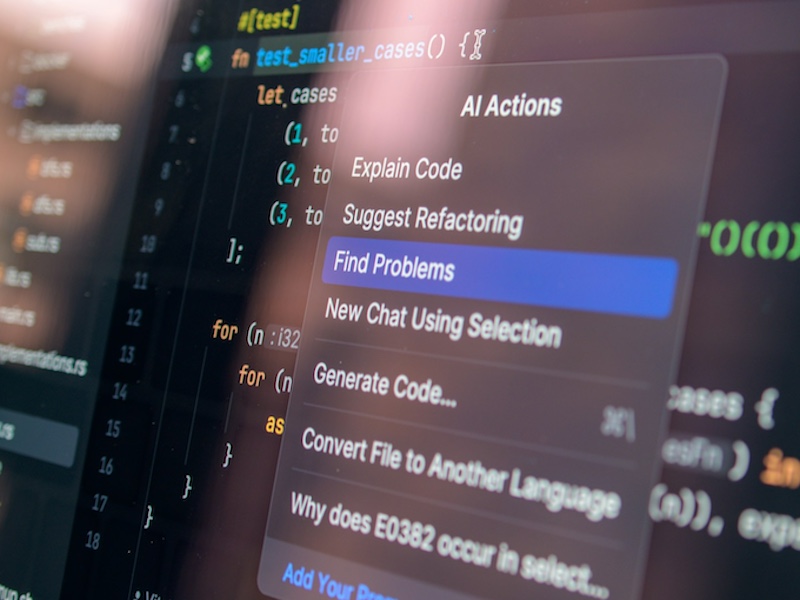
Series 1, Episode 5: ByteSized dRTP: AI-assisted Coding
Date: Monday 12 October, 2026 15:00-16:30 BST
Instructor(s): Jay DesLauriers, Imperial College London
Links:
Registration: Sign up here
AI coding agents are changing how software is written in academia and industry, with tools that can now explore a codebase, run commands and make changes on the user’s behalf. How well these agents work depends on both the underlying model and the harness around it: the instructions, tools, permissions and checks that guide the agent and verify its work. This hands-on session gives an introduction to working with AI coding agents, using GitHub Copilot in VS Code and the terminal as the example, with approaches that also apply to other tools. Attendees will be introduced to the idea of a harness. They will then see how to use Copilot to explore existing code, guide it with project instructions, check its changes with tests, and record its use for reproducibility. There will be time for hands-on experience through guided exercises and follow-along examples.
Prerequisites
Participants will need a GitHub account, VS Code
with the GitHub Copilot extension,
and the GitHub Copilot CLI.
If you are eligible, you may want to sign up for GitHub Education for
free access to additional Copilot benefits (registration can take up to one week), although the free
version will be sufficient for this session. Foundational knowledge of Python and git would
also be an advantage.
If you don’t have the required prerequisites for the session, you are still
welcome to join the session and watch the instructor working through the
interactive aspects of the session.

Series 1, Episode 4: ByteSized dRTP: Secure Data Principles for Digital Research
Date: Wednesday 5 August, 2026 10:30-12:00 BST
Instructor(s): Ellie Sheppard and Madalyn Hardaker, King's College London
Links:
Registration: Sign up here
For this fourth session in the ByteSized dRTP series, we’ll be looking at security-by-design principles. As research becomes increasingly data-driven, understanding security is becoming a core professional skill. We’ll explore how to practically apply security-by-design principles, proportionate to research environments, and how governance, engineering, and research teams can work together to manage risk while keeping pace with innovation.
Prerequisites
- Prerequisites to be confirmed.
If you don’t have the required prerequisites for the session, you are still welcome to join the session and watch the instructor working through the interactive aspects of the session.

Series 1, Episode 3: ByteSized dRTP: Building websites with GitHub Pages
Date: Monday 18 May, 2026 14:00-15:30 BST
Instructor(s): Jeremy Cohen
Links:
Registration: Sign up here
For this third session in the ByteSized dRTP series, we’ll be looking at GitHub Pages. GitHub Pages provides the ability to deploy a website based on content that you host within a GitHub repository. It’s part of the core functionality built into GitHub. In this session we’ll look at how GitHub pages works and the Jekyll static site generator tool that underpins it. You’ll learn how to build and deploy a simple, static website, preparing content in Markdown, without having to write any HTML!
Prerequisites
- You will need a GitHub.com account and some general familiarity with using Git and GitHub to be able to participate in the interactive aspects of this session.
- (optional) Jekyll is written in Ruby. While we’ll focus on using GitHub’s web interface for this session, to be able to write and test GitHub Pages/Jekyll sites locally on your computer, you’ll need Ruby and Bundler, Ruby’s gem package manager, installed on your computer.
If you don’t have the required prerequisites for the session, you are still welcome to join the session and watch the instructor working through the interactive aspects of the session.

Series 1, Episode 2: ByteSized dRTP: Floating point numbers
Date: Thursday 26 March, 2026 14:00-15:30 GMT
Instructor(s): Peter Schmidt
Links:
Registration: Sign up here
For this second ByteSized online class, we dive into the weird and wonderful world of numbers, floating point numbers to be precise. How do computers represent them? Why do some computations go horribly wrong? How do I choose the “right” data type?
Prerequisites
- We will be using Python (3) as the language to demonstrate floating point calculations.
- A link to a GitHub repository will be provided in the class, where you can download the examples discussed in the class.
If you don’t have the required prerequisites for the session, you are welcome to join the session and watch the instructor working through the interactive aspects of the session.


Series 1, Episode 1: ByteSized dRTP: Research Software Sharing, Publication, & Distribution Checklists
Date: Thursday 26 February, 2026 14:00-15:30 GMT
Instructor(s): Richard Acton
Links:
- Podcast: Code for Thought podcast episode
Registration: Sign up here
Join Richard to hear about the key properties of sharing your code, publishing your projects, and how you can distribute code to your user community, all made easier to track with the help of Richard’s checklist tool.
Prerequisites: In order to participate in the interactive part of this ByteSized session you will need:
- To have a GitHub or GitLab account.
- To have an open source project that you own and are happy to use as an example with which to try the application of the sharing, publication, and distribution checklists that will be presented in this session.
If you don’t have the required prerequisites for the session, you are welcome to join the session and watch the instructor working through the interactive aspects of the session.